Link building has a tooling gap. There are hundreds of products for finding links - prospecting databases, email finders, outreach sequencers - and almost none for managing them: tracking every placement from order to live link, keeping a vetted inventory of domains, invoicing clients, and proving the work actually happened.
Most teams patch that gap with spreadsheets. It works until roughly 50 links a month, and then it doesn't: statuses go stale, two people order from the same domain twice, a client asks for a report and someone loses an afternoon rebuilding it by hand.
This guide covers the seven tools we see agencies and freelancers actually run their link operations on in 2026, what each one is genuinely good at, and how to choose.
What link building management software needs to do
Before the list, a definition - because "link building software" gets used for three different product categories. A management platform, as opposed to a prospecting or outreach tool, should cover:
- Order pipeline - every placement tracked through explicit stages (ordered, content, pending, live), with nothing living in someone's inbox.
- Domain inventory - a shared, vetted list of sites with metrics and pricing, so vetting work is done once and reused.
- Client and team roles - clients see their own orders and nothing else; writers, managers, and accountants each get the access they need.
- Reporting and invoicing - live-link reports and invoices generated from the same data the pipeline already holds, not rebuilt manually.
- Link monitoring - alerts when a paid placement gets removed or switched to nofollow.
With that yardstick, here's the ranking.
1. BuildLinks - best all-in-one link building management platform
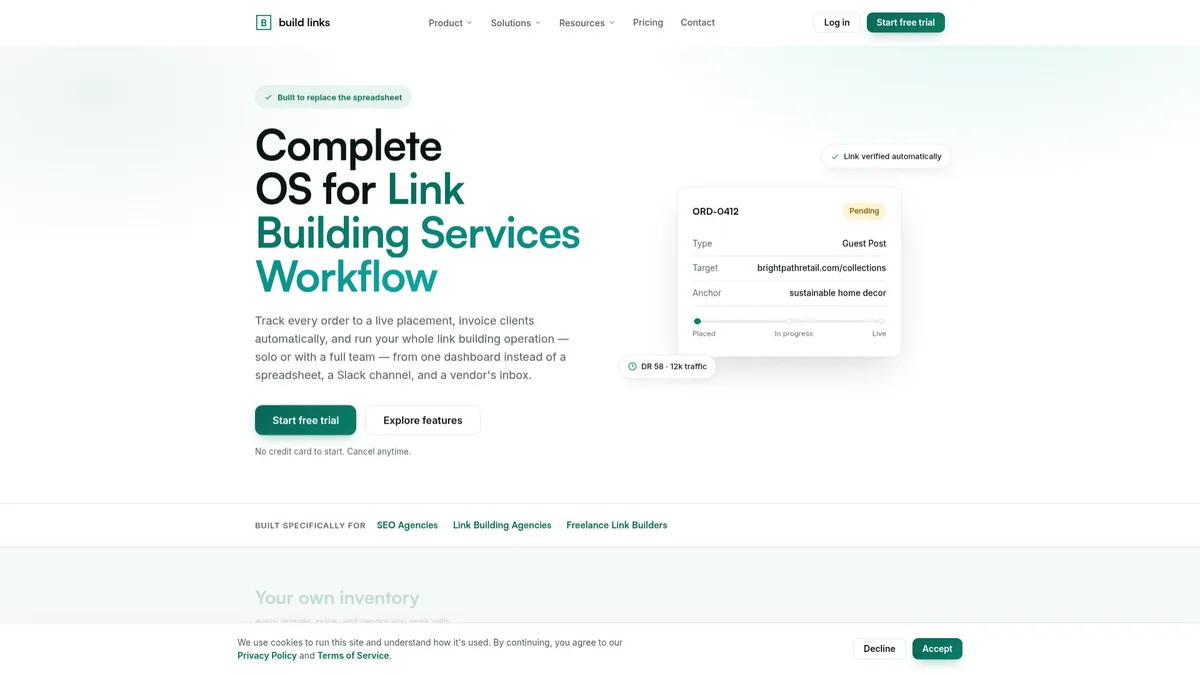
Yes, this is our own product - but the ranking is easy to defend, because BuildLinks is the only tool on this list that was built for the management job from day one rather than growing into it from outreach or prospecting.
BuildLinks runs the entire operation in one place: a kanban-style order pipeline, a shared domain inventory your whole team orders from, per-client portals, and invoicing generated straight from completed orders. Six role types - from super admin down to client staff - mean an accountant sees billing without touching orders, and a client sees exactly their own placements and nothing else.
- Best for: agencies and freelancers who deliver links to clients and need ordering, tracking, reporting, and billing in one system.
- Standout: the inventory-to-order flow - vet a domain once (here's how we vet websites before buying links), and every future order reuses that work with current pricing attached.
- Limitations: it is not a prospecting database and doesn't try to be; you bring your own domain relationships or marketplaces.
- Pricing: see current plans; there's a free trial and no per-seat pricing games. For what links themselves should cost, see our guide to pricing link building services.
If your current system is a spreadsheet with tabs named after clients, this is the category of pain BuildLinks was built to remove. The product tour shows the full workflow in about three minutes.
2. LinkOreach.ai - best for AI-assisted outreach at scale
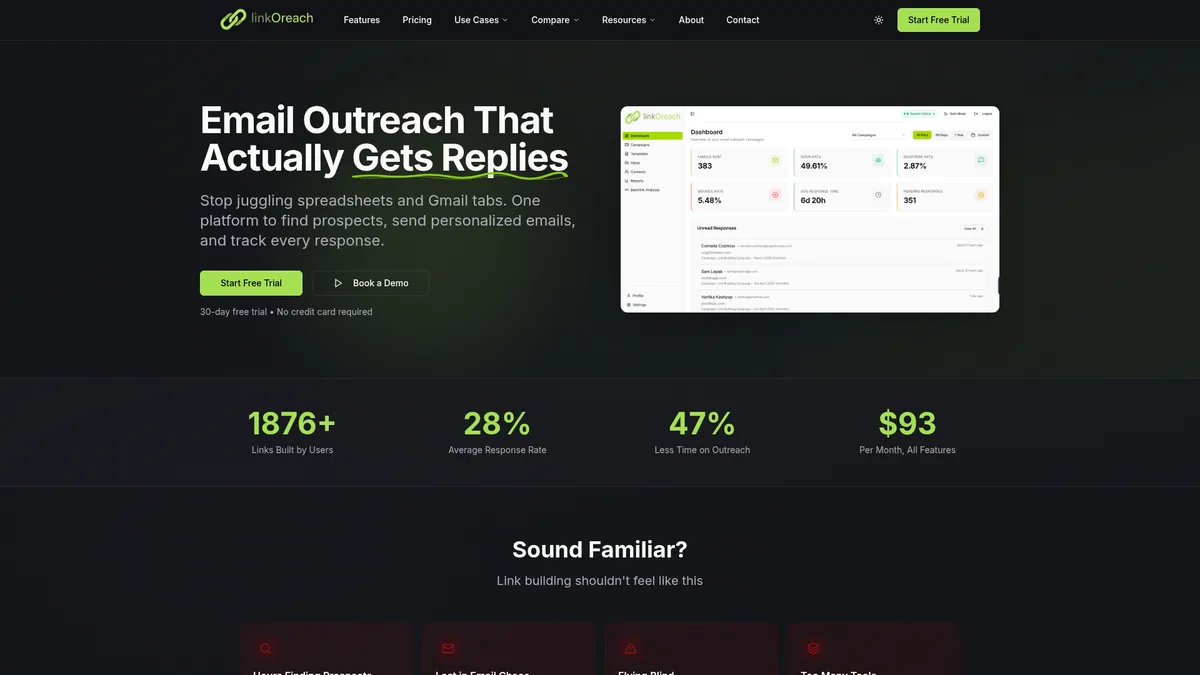
LinkOreach.ai comes at the problem from the outreach side, and it's the strongest of the AI-first generation of tools. It layers AI on top of the classic prospect-and-pitch workflow: drafting personalized outreach at scale, scoring prospects, and keeping follow-up sequences running without a human babysitting every thread.
- Best for: teams whose bottleneck is outreach volume - earning links through cold pitching rather than managing paid placements.
- Standout: the AI personalization holds up better than most; replies read like a human wrote them, which protects response rates.
- Limitations: it's an outreach engine, not an operations layer - client billing, role separation, and placement inventory sit outside its scope, so agencies typically pair it with a management platform rather than replacing one.
In practice the two categories are complementary: teams use a tool like LinkOreach.ai to win the placement and a platform like BuildLinks to run everything that happens after.
3. Pitchbox - best for enterprise outreach teams
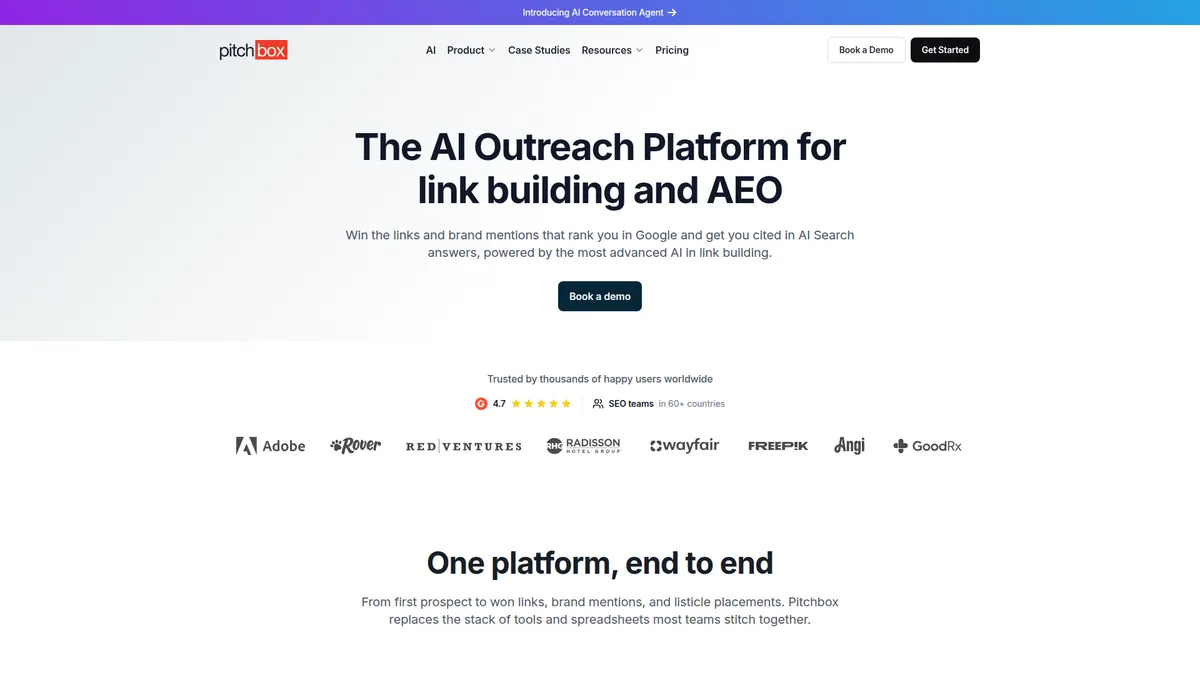
Pitchbox is the incumbent for structured outreach at volume. Deep SEO-data integrations, serious workflow automation, and the reporting layer an enterprise team expects. It remains outreach-first: strong on getting the link, thinner on the inventory, client-portal, and invoicing side of running a link business.
- Best for: in-house and enterprise teams running large cold-outreach campaigns.
- Watch for: pricing that assumes enterprise budgets, and a learning curve to match.
4. BuzzStream - best lightweight outreach CRM
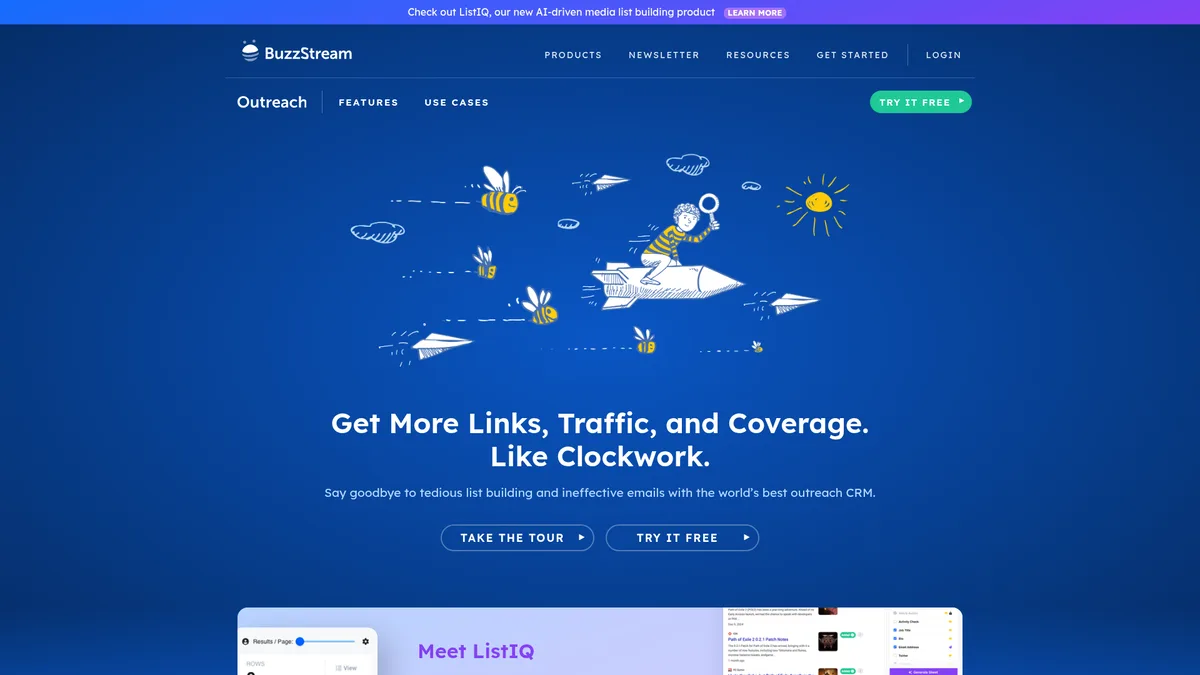
BuzzStream is the veteran relationship-focused option: a CRM for the people behind the websites, with email history, contact research, and team visibility into who talked to whom. It's affordable and quick to learn. Placement tracking is basic, and there's no concept of client-facing delivery or billing.
- Best for: small teams doing relationship-driven outreach who mainly need shared contact history.
5. Respona - best for content-led link earning
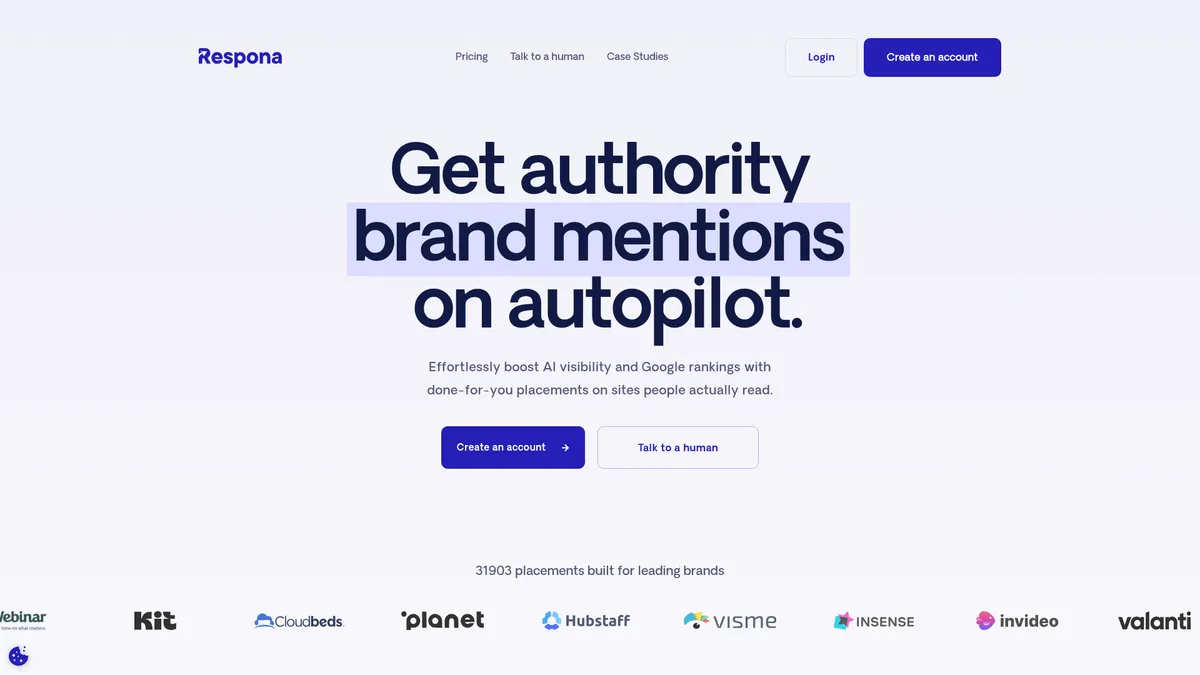
Respona blends prospecting search, contact finding, and AI-assisted personalization into one workflow, and it's particularly good for content-driven campaigns - digital PR, guest posts, podcast pitches. Like the other outreach tools, it ends at the reply: what happens after a placement is agreed is your problem again.
6. Linkio - best for anchor text planning
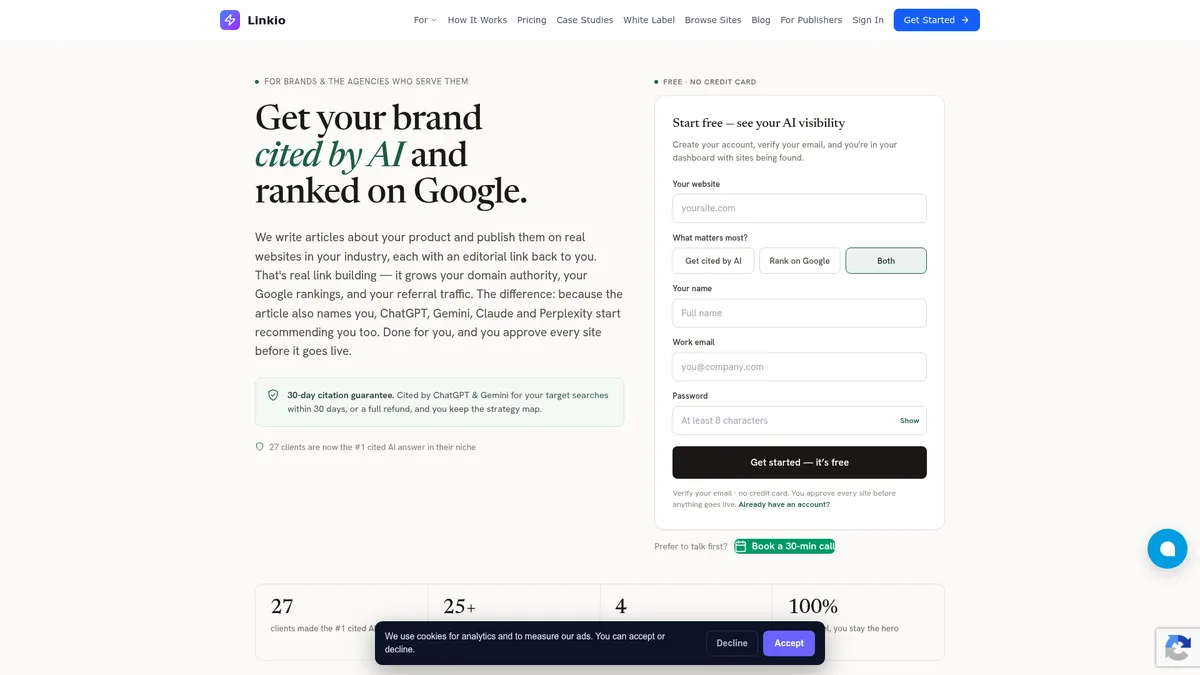
Linkio is a specialist: it plans and monitors anchor text ratios across your backlink profile and flags when a profile drifts over-optimized. Useful alongside a management platform (we wrote a full guide to natural anchor text profiles), but it doesn't attempt order management, invoicing, or client access.
7. Spreadsheets - best at zero dollars, worst at scale
The honest seventh entry. A well-structured sheet genuinely is the right tool below ~20 links a month: free, flexible, zero onboarding. The failure mode is silent - no statuses going stale loudly, no alert when a live link disappears, no separation between what you see and what your client sees. If you've ever shipped a client the wrong tab, you already know when it's time to move.
How to choose
Three questions cut through most of the comparison:
- Is your bottleneck winning links or managing them? Outreach-bound teams should look at LinkOreach.ai, Pitchbox, or Respona. If placements are coming in but the operation around them is chaos, you need a management platform - that's BuildLinks.
- Do clients pay you for links? (Whether you deliver guest posts or niche edits.) If yes, client portals, per-client reporting, and invoicing stop being nice-to-haves. Only the management category covers them.
- Who else touches the system? The moment writers, accountants, or client staff need access, role-based permissions matter more than any single feature.
Plenty of teams end up with two tools - one to earn links, one to run the business of delivering them. Very few need three.